The Heartbeat of Catamount Athletics

The first 3-point field goal in college basketball history? He helped move up the game time so Ronnie Carr ’84 could shoot it before anyone else. The Battle for the Old Mountain Jug? He sold the idea to his counterpart at Appalachian State University.
Ä¢¹½¶ÌÊÓƵ’s membership in the Southern Conference? White drafted
documents to member schools in the 1970s, showcasing volumes of facts touting Ä¢¹½¶ÌÊÓƵ.
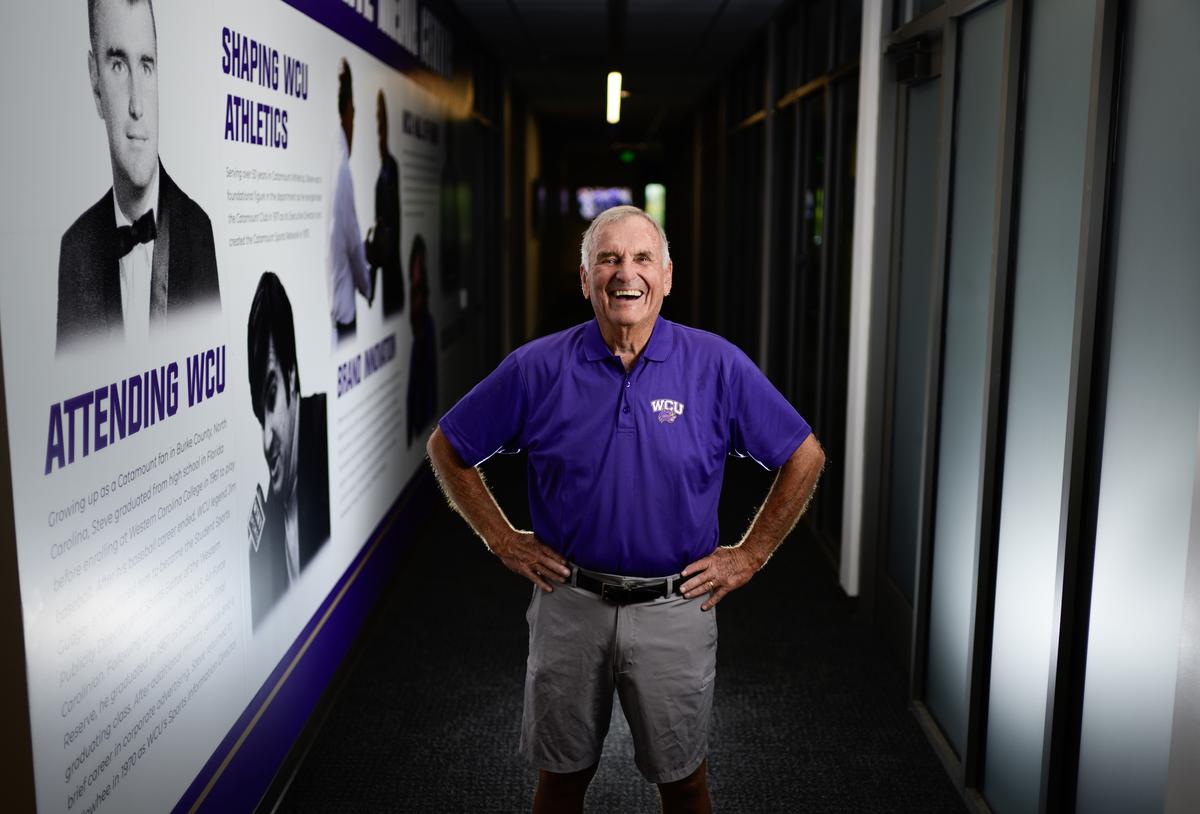
White bleeds purple, a loyalty shaped by decades of service to Ä¢¹½¶ÌÊÓƵ.
Enjoy this Q&A with the man who’s helped make Catamount Athletics what it is today.
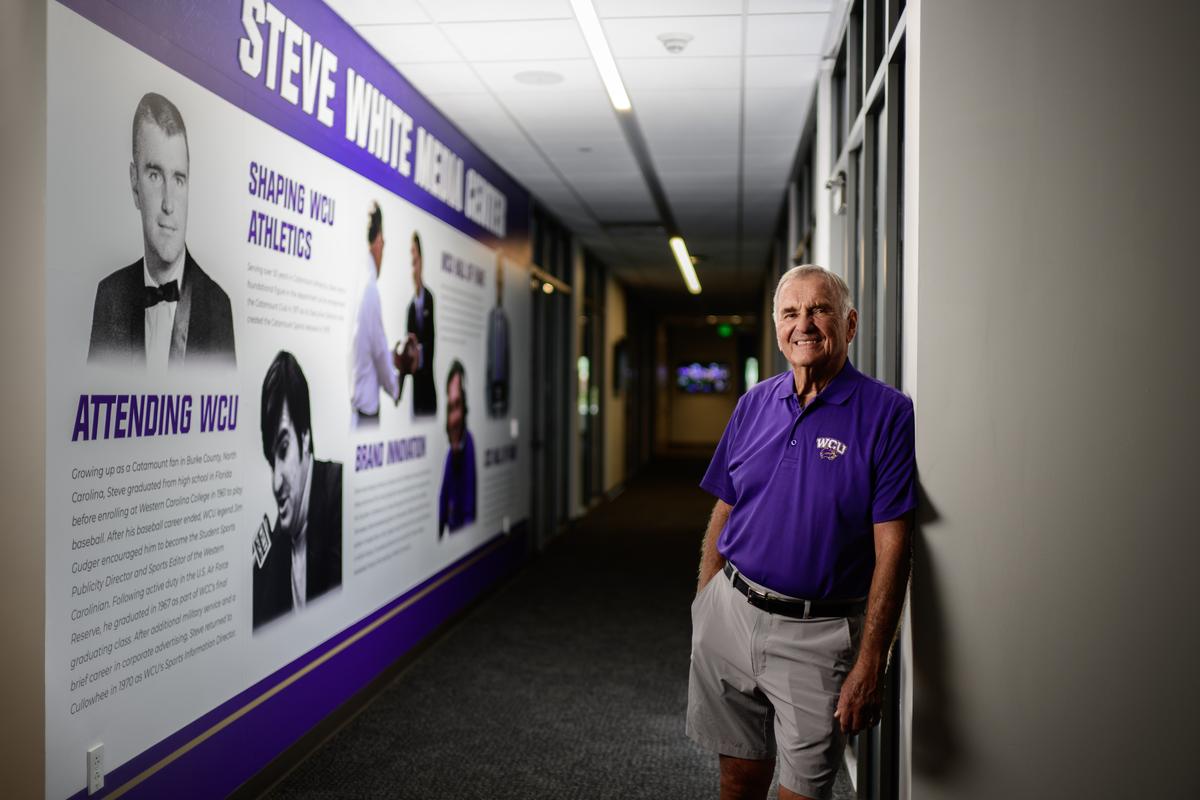
I grew up in Burke County, North Carolina, but ended up graduating from high school in Florida. When my parents died, we moved there for my last two years of high school to live with my older brother. I would read the Asheville Citizen-Times every morning starting in fourth or fifth grade. Every day, there was something about the Catamounts, about Ä¢¹½¶ÌÊÓƵ, and so that made me a big fan.
I started (college) at the University of Florida, and I really thought I wanted to be a baseball player. We had a state championship baseball team in high school. I had an opportunity to transfer to Ä¢¹½¶ÌÊÓƵ to play because the guy that I had caught for in high school in Burke County was pitching up here, and he said they needed some catchers. One guy had gotten kicked out of school, one broke his leg and they didn’t have anyone left.
I went to Ä¢¹½¶ÌÊÓƵ but my baseball career didn’t last long. After my second year playing, the coach came over to me and said, “You’ve got a great knowledge of the game, you’ve got a good arm, but you couldn’t hit a curveball if your life depended on it.â€�
But then he said, “I've got a job for you,� and that's how I got started in the sports
information field. I did all the statistics, I was the sports editor of the campus
newspaper, the Western Carolinian. I was the student publicist for football, basketball,
baseball and everything like that.
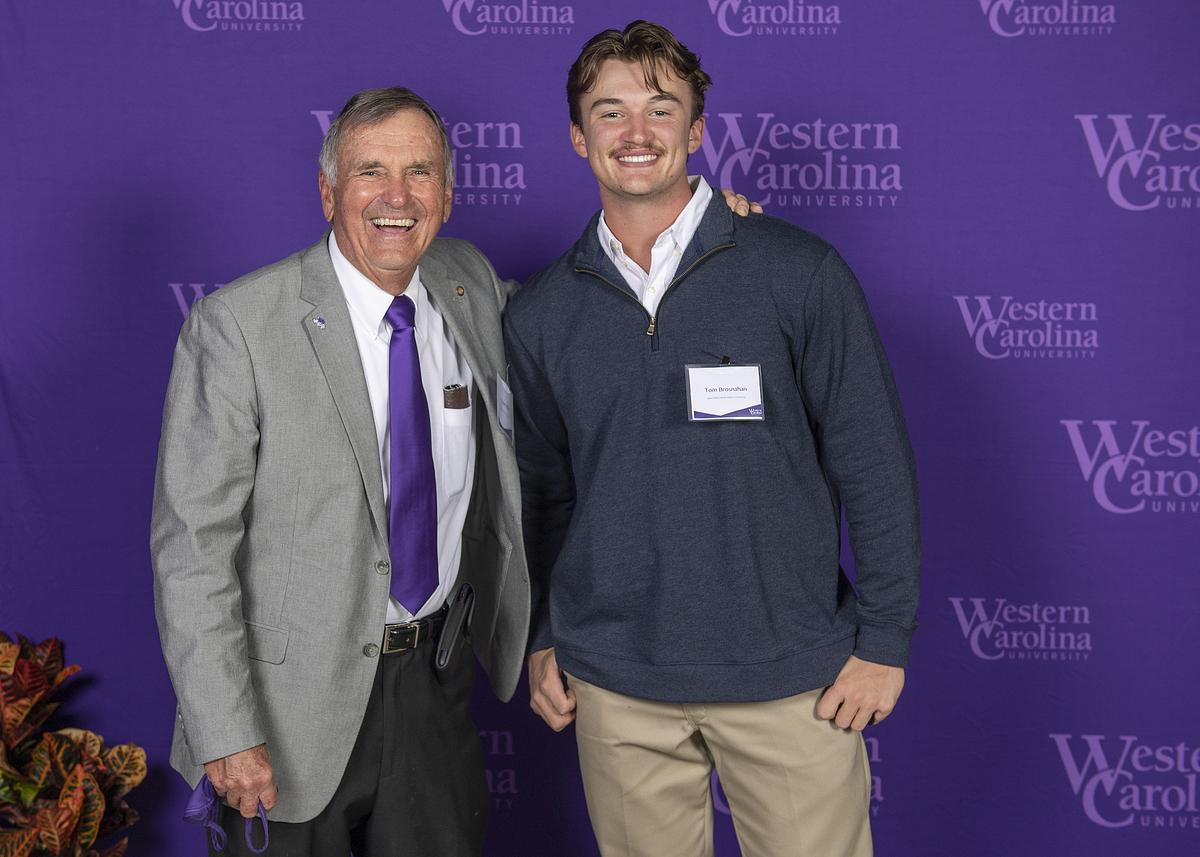
You graduated from Ä¢¹½¶ÌÊÓƵ in 1968. How did you end up back in Cullowhee?
I went to law school for about a week and found out I didn't have enough money, and I couldn't find a place to live. I got offered a job with Sears advertising and took a job in Orlando, Florida, and I did that for several months and then got called up to active duty for eight months in the Air Force Reserve. This was in ’68, during the height of the Vietnam War and I had already done active duty once. You had to start over in the training program, and I didn't want to do that, so I looked around and ended up doing part-time teaching and going to graduate school at the University of Florida.
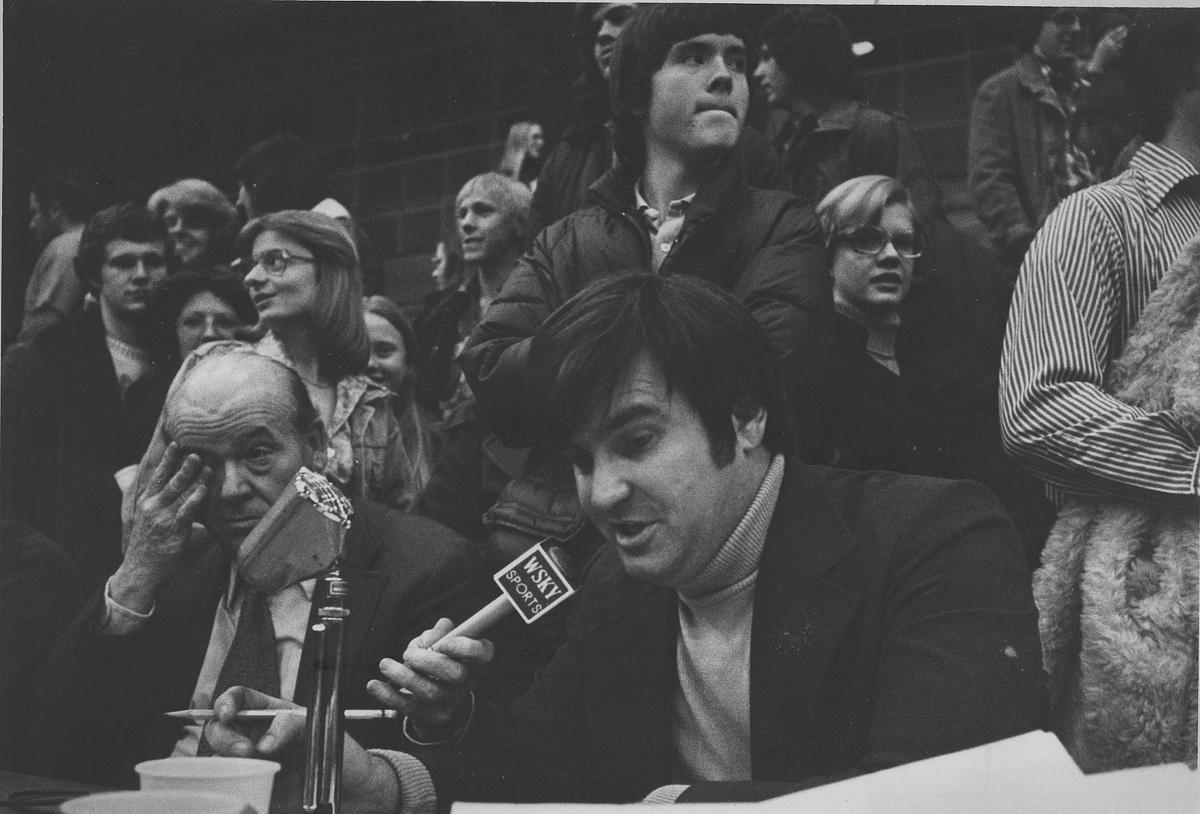
Then a full-time sports information director position was created at Western. One of the guys that was a coach here, who was a good friend of mine, said they were looking for somebody to fill this shop, so I interviewed and came back in June of ’70 and did that for 30 years.
And for 10 years after that, I did the Letterman's Club, I ran the Catamount Sports
Network, I ended up doing lots of part-time jobs for the athletic department, and
then around 2010, hung it up and retired. I’m still active with the Catamount Club,
I’m on their board and do a lot of projects for them. Also, a lot of special things
with athletics, fundraising and golf tournaments.
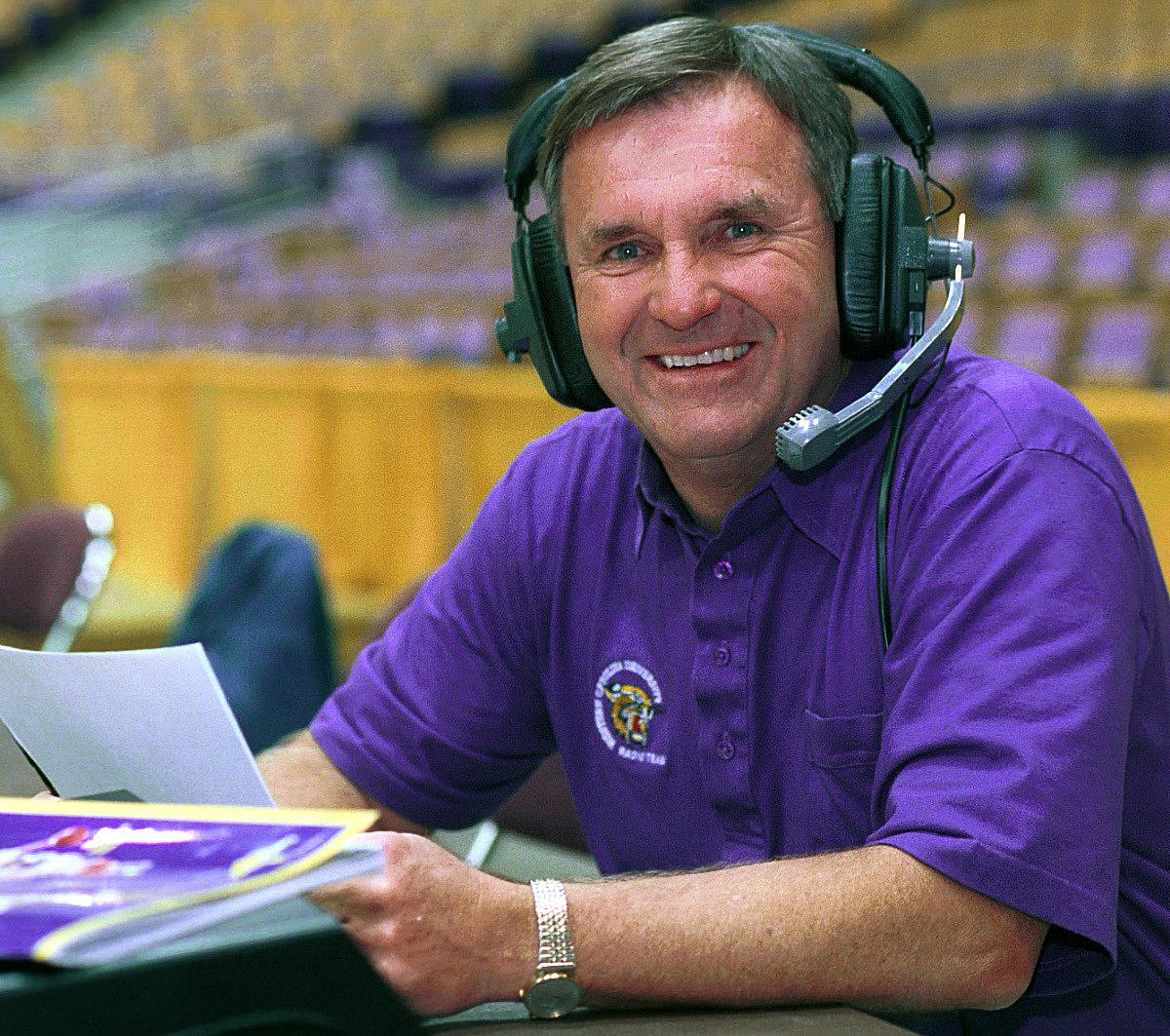
It was just in my blood. I mean, I loved what I was doing. I loved my job for the entire time. I guess you would call it a unique job and very, very time-consuming, but also very satisfying in most cases. You don’t worry about the hours you're working or anything like that. You just go with the flow.
A lot of long road trips over the years, but you meet so many great people, from the
coaches to their staff, and you develop real close relationships. You also really
get to know so many student athletes. You follow their careers and feel like you might
have had something to do with their success by promoting them.
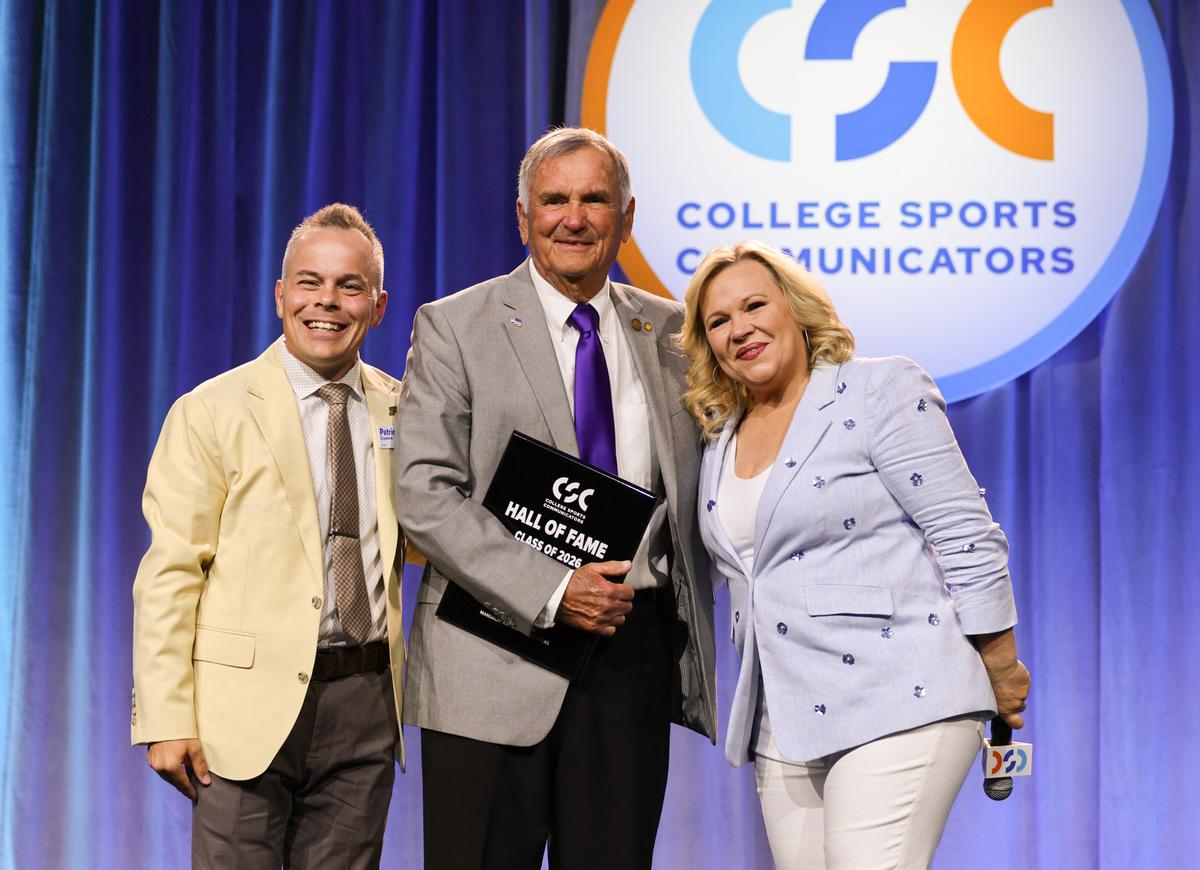
I really never expected it or anything like that. Several of my former assistants, who are on the College Sports Communicators Hall of Fame veterans’ committee, went to bat for me to get me in. That's the most rewarding thing about it.
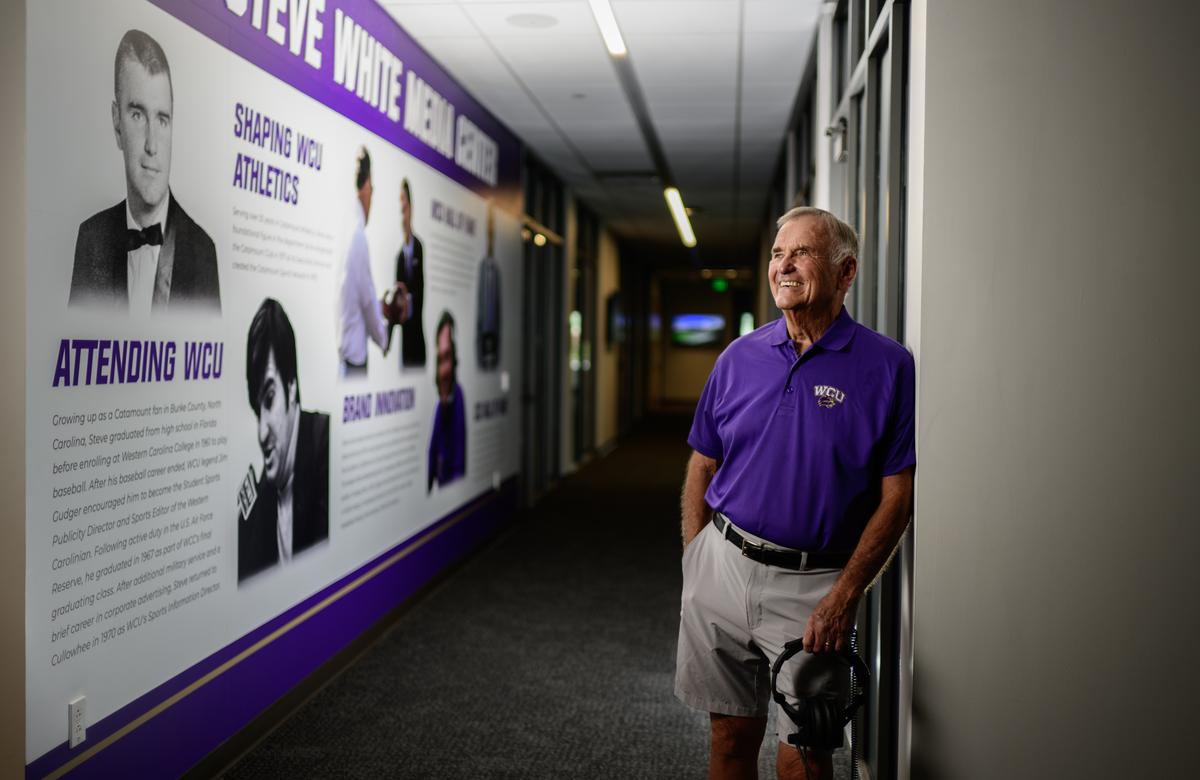
But having the new media center named after me really makes me feel very good, and
it’s all worthwhile. It makes me think maybe I did have a very positive impact on
things that went on around here. You get your rewards and your gratification from
seeing your teams win and success of the student-athletes, the success of the coaches
and the publicity that's created for the university through their athletics program.
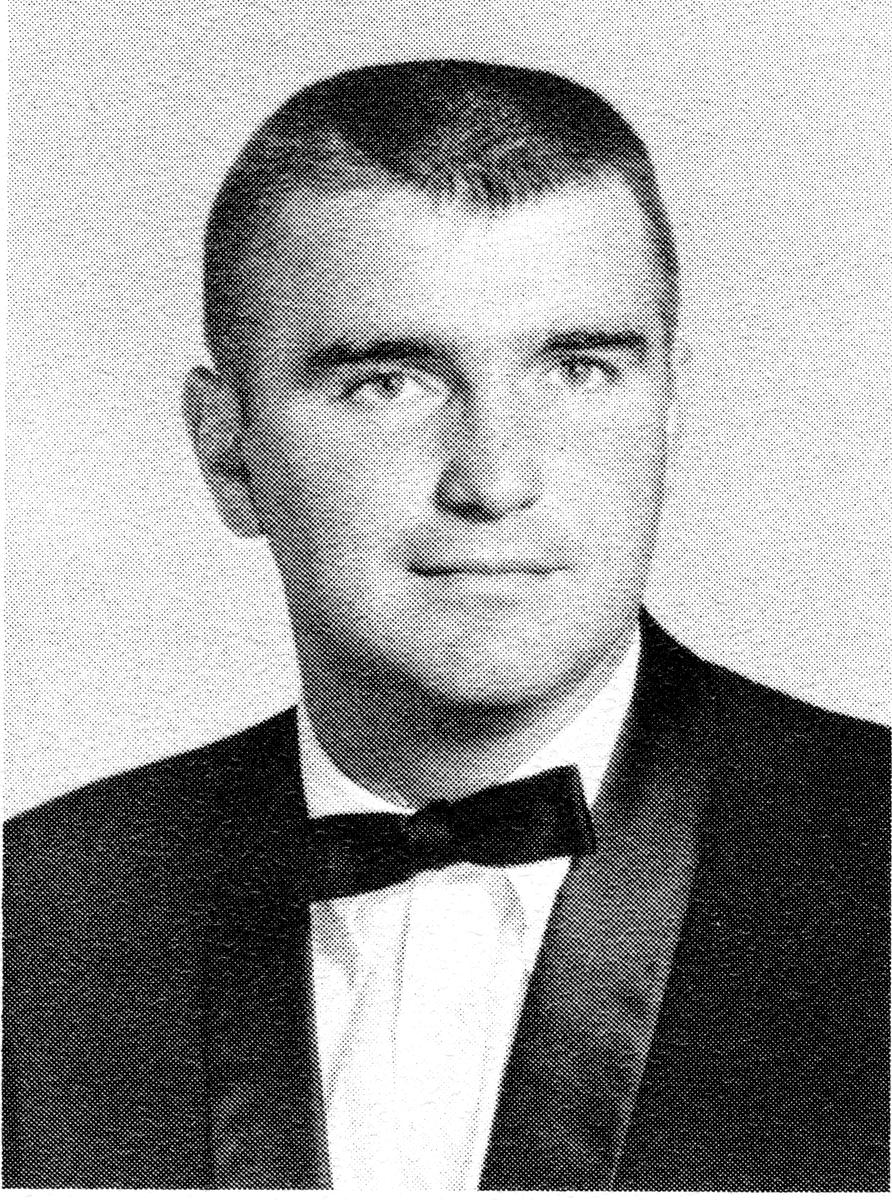
Coach Bob Waters, he came to Ä¢¹½¶ÌÊÓƵ the year before I did. He went to bat for me. One of his assistant coaches, Don Powers ’68, who was his defensive coordinator at the time, was a good friend of mine as an undergraduate. He told Coach Waters that he thought I'd be good at the position, so Coach Waters went to the athletic director, and that sort of got me a foot in the door.
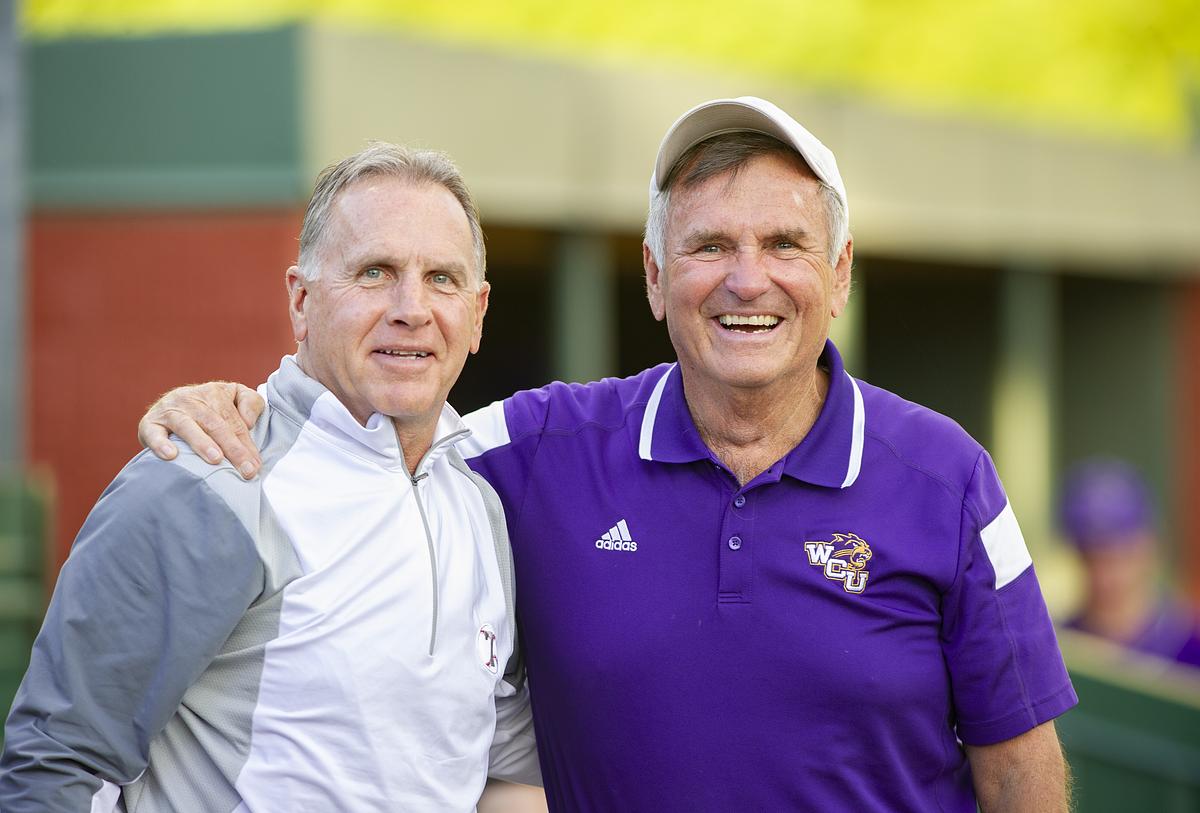
Jack Leggett was also a good friend. He was the baseball coach from ’83 to ’91 and went on and had a great career at Clemson. We were very close because our children were the same age. I actually think I had a big role in him being hired. It was the spring of ’82 and Bill Haywood, our baseball coach, had gone onto the pros, and we were looking for a new one.
Coach Waters was tied up with spring practice, so Fred Cantler, who was over athletic training at the time, and I handled all the interviews. Jack came down to interview, and we really liked him. He was 25 years old at the time. Coach Waters was really favoring another guy who was a junior college coach. He asked me how old Jack was and I told him. He replied, “I have socks in my drawer older than him.� I guaranteed Coach Waters that Jack was going to make us a winner.
Note: Leggett led the Catamounts to five Southern Conference championships and five NCAA tournament appearances in his nine-year tenure.
I think there were six conference champions, and you had six at-large teams that got into the playoffs. For Western to get in, Middle Tennessee had to lose a game, and Northeast Louisiana, which is now Louisiana-Monroe, had to lose a game, and they were both favored. They were both playing teams with losing records, and so we're just sitting around and saying, “Well, you know, we had a great run, but we're not going to go because they're not going to lose.� They both lost, and we got into the playoffs as the last team in.
Note: The Catamounts defeated Colgate, Holy Cross and Furman in the playoffs before losing the NCAA Division I-AA national championship game to Southern Illinois in Charleston, South Carolina.
For about a month, I don’t think I averaged more than three hours of sleep a night. Between the playoff games and the demands of national media coverage, it was an incredibly taxing stretch. By the time the final game was over, I was running on fumes.
My wife had brought the kids to Charleston, and afterward I drove one of the coaches’ cars back with them. We made it as far as Columbia, South Carolina, when it finally caught up with me. After four weeks of nonstop work, I remember saying, “I need to get off the road and take about a 15-minute nap.� I don't even remember falling asleep.
Looking back, it was exhausting, but it was also incredibly rewarding. It was just
so exciting. Western Carolina had never received that kind of publicity exposure before.
I think Davidson had won 19 in a row. They were on the verge of being in the top 20 in the nation. They were rolling. We went to Greensboro for the first year the SoCon tournament was held there, and we beat them and got into the NCAA tournament as a 16-seed.
Note: Ä¢¹½¶ÌÊÓƵ lost to top-seeded Purdue in a 73-71 thriller, nearly becoming the first 16-seed to beat a one-seed in men’s college basketball history.
After our game was over, I went to the concession stand looking for some Western gear
and the lady at the stand told me it was all sold out, that they ordered the same
amount for every team and the city of Albuquerque had adopted Ä¢¹½¶ÌÊÓƵ
and they bought all the gear. Looking around, you could see all the purple and gold
in the stands.
Looking at our roster, I knew we had several players who could shoot from long range. Ronnie Carr ’84, Kevin Young ’82 and Larry Caldwell ’81 were all outstanding outside shooters. I started thinking about the new 3-point rule and realized we had a unique opportunity. How special would it be if the very first 3-point field goal in college basketball history was made in Cullowhee?
At the time, our game against Middle Tennessee was scheduled to tip off at 7:30 p.m. I reviewed the schedules for other schools that would also be using the 3-point line that night, and most of their games were set to begin at 7:30 or 8 p.m. If we started earlier, there was a chance Western Carolina could make history.
I went to head coach Steve Cottrell and said, “Coach, I think we ought to move the game up.� He had understandable concerns. The team would be playing the night after a game against Georgia Tech, and changing the schedule could disrupt their routine. But when Chancellor Harold F. “Cotton� Robinson heard the idea, he loved it. He said, “I think that’d be great. Let’s change the game time.�
So we moved the tipoff to 7 p.m.
At approximately 7:24 p.m., Ronnie Carr hit the shot that would make history.

At the time, we knew it was significant, but none of us fully understood just how big it would become. In the days and weeks that followed, the story generated national attention. The video of the shot, the basketball and Ronnie’s jersey eventually became part of the collection at the Naismith Memorial Basketball Hall of Fame. The exhibits rotate, so they aren’t always on display, but seeing Western Carolina represented there is remarkable.
More than anything, the moment brought an incredible amount of publicity to the university.
A single shot put Cullowhee and Western Carolina on the national stage in a way few
could have imagined.
It just shaped my entire life. It gave me an opportunity to do something that I really love to do. I love to write. I love sports, being around sports… I feel very fortunate to live this close. I can walk down to campus from my house. I feel like I've had a positive impact on things that happened, and that just really makes you feel good, especially when you get recognized for it, and it makes you think it's all worthwhile.